Box Office Surges 8,000-Fold: Inside China's Crudely Animated Viral Hit "Niu Lai"
A no-budget Chinese animated film with animation cruder than AI has stunned box offices across the strait, and behind the "so bad it's famous" production lies a touching mother-son story.
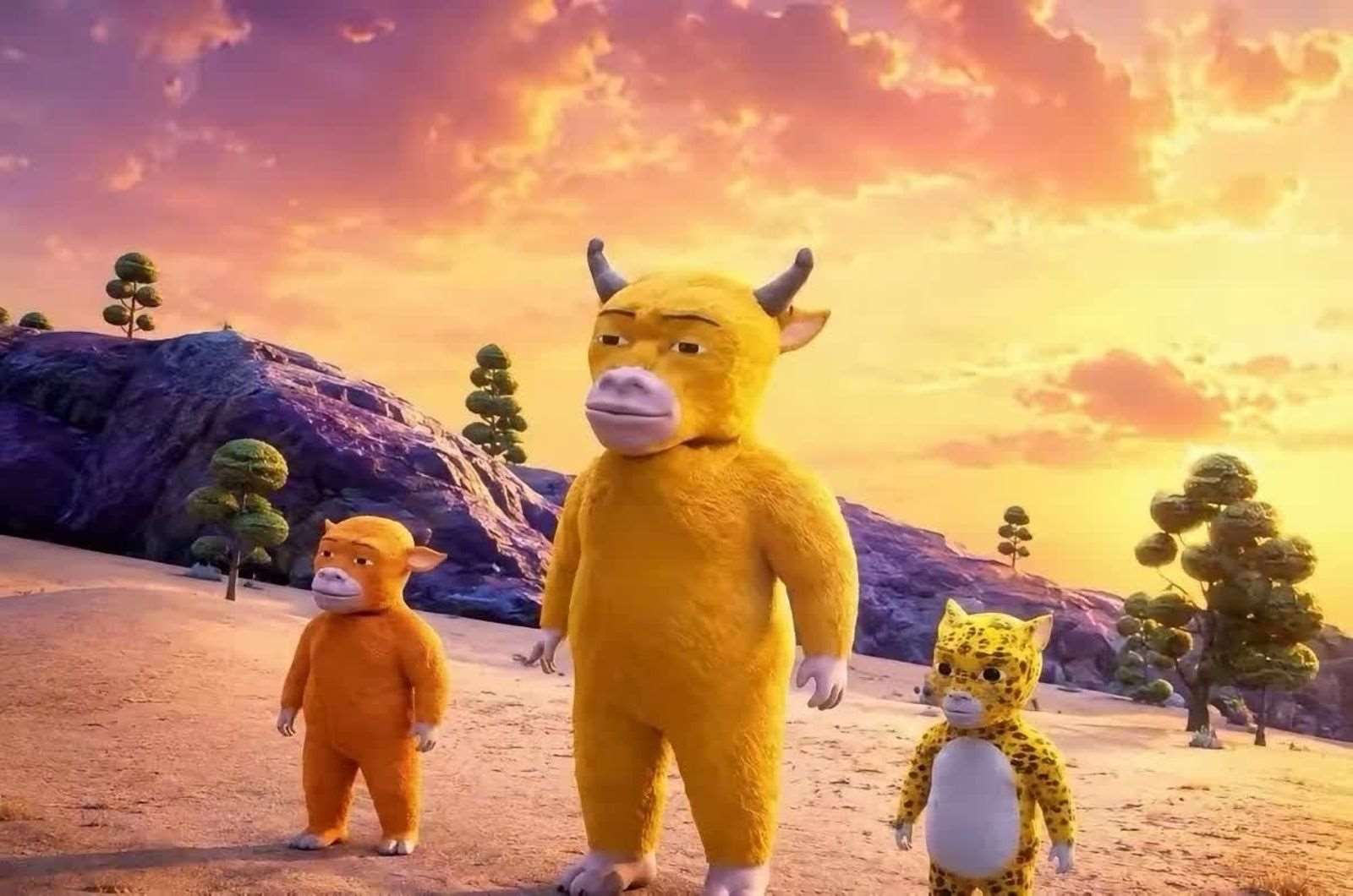
Photo: Radio Taiwan International (Rti)
Dubbed "epic-level garbage" by online critics, the low-budget Chinese animated film "Niu Lai" went viral across mainland China and Taiwan in mid-August. Powered by animation cruder than AI, a bizarre visual style and an absurd plot, the film staged an unlikely box-office comeback and spawned countless memes on social media. Yet behind this "famous for being terrible" production lies a little-known family story. What broader phenomenon can we observe through this episode?
Box Office Surges 8,571-Fold, Cracking the Top 10 of 2026 Domestic Animation
"Niu Lai," a film produced for no more than a six-figure sum in RMB, opened in Chinese theaters on Aug. 5. Because of its crude animation, bizarre visuals and plot, and near-zero marketing budget, it had earned just over 7,000 yuan (about NT$32,000) in its first nine days. But as the first wave of audiences shared their impressions on social media, growing curiosity and a contrarian impulse sent crowds flocking to theaters to see it for themselves.
As buzz mounted, the number of screenings gradually increased. But because the distributor failed to supply enough posters, standees and other promotional materials, theater staff around the country resorted to hand-drawing their own posters — inadvertently sparking another wave of online chatter.
Because the distributor of "Niu Lai" provided no official promotional posters, theater employees across China took matters into their own hands, using whiteboard markers and cardboard to create "hand-drawn posters." (Photo: AFP)
According to Maoyan Entertainment data, as of the morning of Aug. 31, the box office had surged 8,571-fold to nearly 60 million yuan (about NT$282 million), cracking the top 10 of China's 2026 domestic animation chart — a genuine cinematic marvel.
Major international outlets including Britain's The Guardian, Reuters, The Associated Press and the BBC followed up with coverage. As the film grew hotter, merchandise began appearing on online shopping platforms in both China and Taiwan. In addition, according to Phoenix New Media, the director has revealed that his next project, "Yang Gao," has officially begun production.
Rival Director's Breakdown: Never Making a Theatrical Film Again
The absurd success of "Niu Lai" also drew pained criticism from peers. Cui Jingxuan, director of "Citywide Manhunt," a Chinese theatrical release opening around the same time, posted on Weibo denouncing the thousand-fold box-office surge of "Niu Lai" as leaving him feeling pale and powerless, saying "it (Niu Lai) has torn away the last fig leaf of Chinese theatrical cinema."
Cui said he believed "Citywide Manhunt" was a film that did right by its audience, with decent word of mouth, yet compared with "Niu Lai" it couldn't secure screenings or generate any public buzz. He began to question whether making films seriously still held any meaning, and announced that he would never make a theatrical film again.
Akio Yaita: Reflecting Three Emotions in Chinese Society
Japanese-born Taiwanese journalist Akio Yaita analyzed that the runaway success of "Niu Lai" reflects three emotions in Chinese society. First, people badly need a target they can "safely mock." Space for public speech on the Chinese internet is growing ever narrower — politics can't be casually criticized, and many social issues can't be discussed in depth. Criticizing a bad film carries little political risk, so people relished the chance to jeer, make memes and write jokes. On the surface they were bashing "Niu Lai," but what they truly savored was perhaps the long-lost feeling of "being able to say whatever they want."
Second is dissatisfaction with China's film censorship system and creative environment. It's not that China lacks good directors, screenwriters and actors, but the "red lines" keep multiplying — directors dare not shoot, screenwriters dare not write, and the resulting works are often bland and formulaic. Audiences develop a contrarian mindset: since bad films are everywhere anyway, they might as well pick the one "universally agreed to be the worst." At least they can all laugh at it together.
Third, though "Niu Lai" is crude, it unexpectedly won some people's goodwill — perhaps precisely because it does no "flattering." There's no grand narrative, no national rejuvenation, no deliberate praise of anyone — just an ordinary mother and son clumsily telling the story of a little calf's growth. In an age when AI can generate dazzling images in seconds, two amateurs spent five years persisting to complete the work. At the very least, it conveys a rare sense of authenticity.
German-language media described it as an online meme fest and Dadaist carnival of "the ultimate in bad becoming beauty," noting that much of the online praise was in fact a highly ironic sociological metaphor.
Euronews offered a deeper cultural-psychological analysis. It noted that at a time when algorithmically and AI-generated polished videos flood social networks, this heavily pixelated, technically inept film has instead become an "antidote" for the younger generation resisting "AI standardized aesthetics."
A Moving Family Story
Director Xin Yumeng, from Dalian in Liaoning province and born in 1992, majored in landscape art as an undergraduate, according to Guancha.cn. But after watching many animated films in early 2021, he became interested in filmmaking and completed the project's official registration (allowing production to begin) by year's end. The creative process was extremely stressful, even leading to arguments with his family. In the end, relying on a "two-person team" with his mother Sun Lifang, he spent five years — with no AI elements whatsoever — "making the film frame by frame by hand."
Before production, Xin Yumeng was full of confidence, unaware that landscape art and art design are entirely different disciplines. He said he encountered countless difficulties and technical hurdles early on, so much so that he only began separately studying animation production in 2022. Had it not been for his parents' support and encouragement, the then-30-year-old might have given up long ago.
According to Xin, his mother is just an ordinary employee at a state-owned enterprise, but she learned screenwriting from scratch, voiced all the female characters, and completed the composition, lyrics and performance of the closing song "Fresh Breeze Is Fragrant After the Rain." In steering the script, Xin initially clashed with his mother on many points, but because his parents had richer life experience, he ultimately chose to follow the elders' advice.
The closing song contains two lines: "When the rain is gentle and the breeze soft, when the sprout breaks through the soil" — the words "rain" (yu) and "sprout" (meng) together form the son's name. The mother cleverly wove his name into the lyrics to express her hopes for her son's growth. Netizens have also speculated about the song's title, "Fresh Breeze Is Fragrant After the Rain," noting that "fang" in the mother's name is synonymous with "fragrance," which can be read as the love and support behind her.
In addition, because 2021 happened to be the Year of the Ox, and the father was also born in the Year of the Ox, Xin combined some of his own life reflections to create a protagonist calf named "Niu Lai" — which is also the origin of the film's title. (Editor: Zhong Jinlong)
Source: Radio Taiwan International (Rti) — https://www.rti.org.tw/news?uid=3&pid=229195